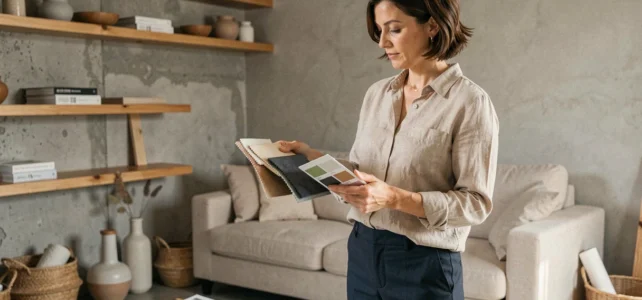
Choosing interior decoration equipment is not just about finding an object that looks good in a photo. Furniture, lighting, textiles, and decorative objects interact with the dimensions of a room, the available natural light, and the materials already present. Understanding the physical constraints of a space allows for choices that will last over time, beyond mere aesthetics.
Sustainable materials and low emissions: the real first filter for your decor equipment
The choice of materials determines both the longevity of the equipment and the quality of indoor air, much more than the color palette or the chosen style.
Since 2025, sustainability of materials has become a central purchasing criterion for a growing share of consumers in France. Interiors considered complete rely on certified or recycled wood, recycled metal, eco-friendly textiles, and low-VOC (volatile organic compounds) finishes.
It is essential to check that paints and varnishes use a water-based formula, that waxes are solvent-free, and that textiles (cushions, throws, curtains) carry identifiable labels. A certified solid wood piece of furniture will last for several decades. A low-quality particle board will start to degrade after a few years while emitting VOCs into the room.
To guide your choices based on these criteria, the equipment offered by NANANERE DÉCO allows you to compare ranges that incorporate these sustainability and quality finishing requirements.
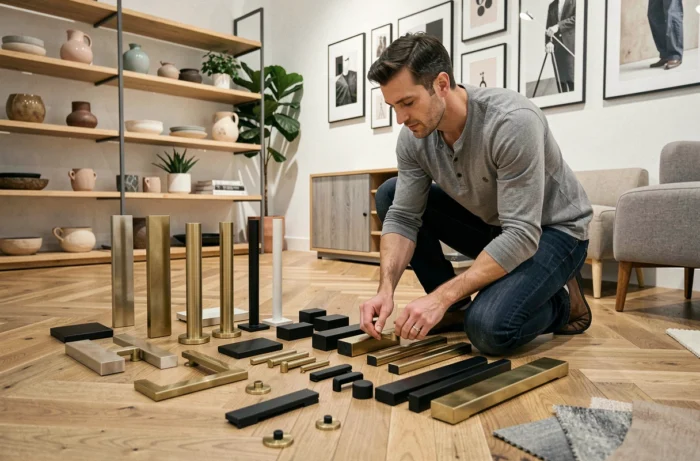
Indoor lighting: layering light sources rather than relying solely on a ceiling fixture
Lighting is probably the most underestimated aspect of decoration. A room can have remarkable furniture: if the lighting is poorly designed, the whole will appear dull or harsh.
Successful lighting relies on three layered levels: ambient light (ceiling fixture, pendant), functional light (desk lamp, reading light), and accent light (directional spots, LED strips). Most interiors settle for the first level.
How to adapt lighting to each room
In a living room, ambient light should remain diffuse and warm. A dimmer switch radically changes the atmosphere without replacing the fixture. Accent lighting, directed at a painting or a shelf, creates depth.
In a kitchen, functional light takes precedence. A poorly lit work surface makes the space impractical, regardless of the furniture design. LED strips under upper cabinets solve this problem at a moderate cost.
The color temperature of the bulb is as important as the fixture itself. A cool white bulb in a living room creates a clinical atmosphere. A warm white bulb in an office strains the eyes. Adapting the temperature to the use of each room avoids these common mismatches.
Furniture and space proportion: measurement mistakes that ruin a room
Buying a sofa without measuring the circulation space around it is the most common trap. A piece of furniture can look beautiful in a showroom but overwhelm a medium-sized living room. Ideal ratios vary depending on the layout, but one constant remains: leave at least a 60 cm clear passage around each main piece of furniture.
Adapting the scale of furniture to the volume of the room
In a small space, a large corner sofa can work if the rest of the furniture remains light (glass or thin metal coffee tables, open shelves). In a large room, furniture that is too small gives an impression of emptiness and coldness.
Before any purchase, three concrete actions can help avoid costly mistakes:
- Mark the exact dimensions of the furniture on the floor with tape to visualize the actual footprint in the room
- Check the seat height in relation to the table (a few centimeters difference between chair and table makes meals uncomfortable)
- Measure the diagonal of doors and hallways to confirm that the furniture will fit on delivery day

Textiles and decorative objects: how to balance without overloading
Textiles (curtains, cushions, rugs, throws) bring warmth and soften the acoustics of a room. Decorative objects (vases, frames, sculptures) add personality. The problem arises when these elements accumulate without logic.
A coherent interior limits its palette to two or three dominant shades for textiles. This does not mean a monotonous space: variations in texture (raw linen, velvet, boucle wool) create visual relief without multiplying colors.
The rule of visible empty space
On a shelf, on a console, or on a wall, empty space is part of the composition. An overloaded wall of frames loses readability. Three well-spaced frames create a clearer effect than ten tightly grouped frames.
For decorative objects, grouping in odd numbers (three candles of different heights, five small vases) works better visually than symmetrical pairs. This principle of asymmetrical composition regularly appears in the practices of professional decorators, even if each project requires its own adjustments.
- Choose textiles made from natural materials (linen, cotton, wool) for their durability and ability to capture light
- Favor objects of varying sizes to create movement on a flat surface
- Avoid complete matching collections (identical cushion, curtain, tablecloth) that give a catalog appearance
The choice of decorative equipment is based on measurable constraints: dimensions, materials, color temperature, proportions. A piece of furniture at the right scale, lighting suited to the use, and durable textiles transform a space without needing to replace everything each season.