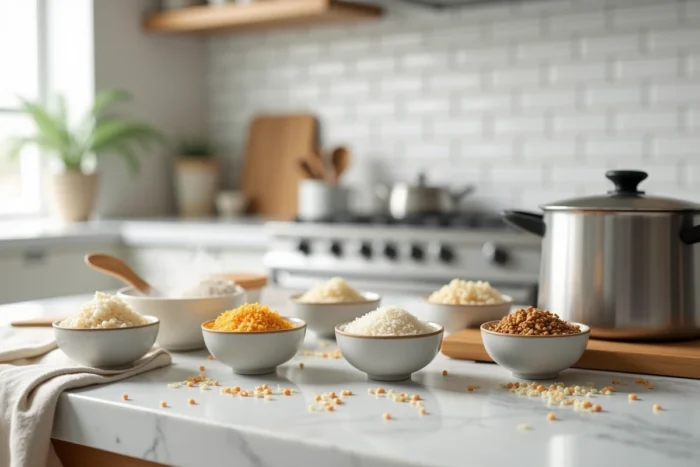
The water-to-rice ratio, rinsing, and resting after cooking: these three parameters alone determine the final texture of the grain. Here we review ten precise techniques for cooking rice without approximation, from controlling residual starch to managing post-cooking health risks.
1. Add vinegar to the cooking water to modify the starch
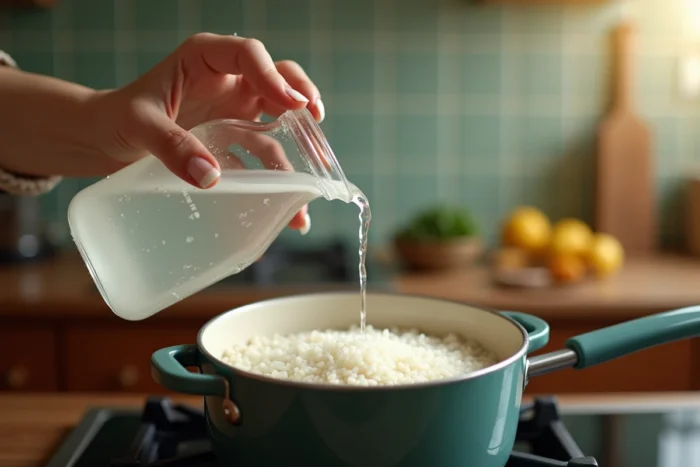
The acetic acid in rice, cider, or white vinegar acts directly on the starch chains. Half a teaspoon is enough for a standard volume. The result: grains that are more separate and less sticky, with no perceptible sour taste after cooking.
This technique, highlighted by Top Santé in 2024, remains underutilized in mainstream guides. We recommend testing it first on basmati rice, whose long structure amplifies the effect of separating the grains.
Find more tips for easily cooking rice with a simple electric kettle, a method that shortens boiling time.
2. Respect the ratio of 1 volume of rice to 1.5 volumes of water
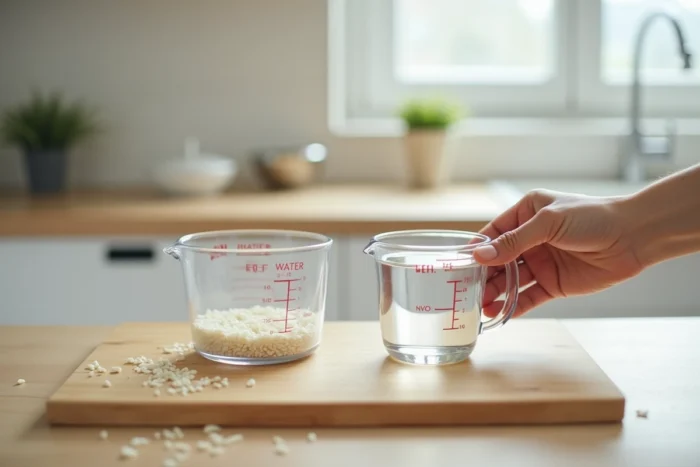
The amount of water is crucial. For long-grain white rice (basmati, jasmine), the 1:1.5 ratio yields a texture that is neither dry nor mushy. One volume of rice, one and a half volumes of water, no more.
Measuring with a glass or cup works better than estimating by eye in the pot. Any excess water turns the grain into mush because the starch gelatinizes more than it should.
3. Rinse the rice until the water runs clear
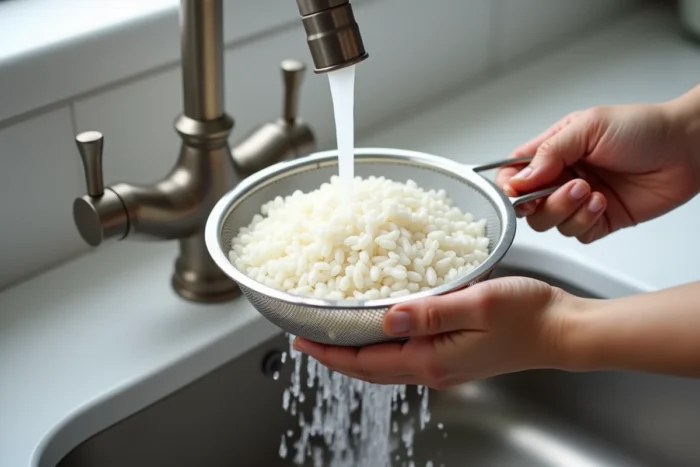
Rinsing removes excess surface starch, which is responsible for the sticky texture. Three to four rinses under cold water are usually sufficient. When the water running off becomes clear, the rice is ready.
Skip this step only for deliberately sticky uses (sushi rice, glutinous rice). For pilaf or side rice, unwashed grains stick to the pot and clump together during the first minute of resting.
4. Turn off the heat and let it rest with the lid on
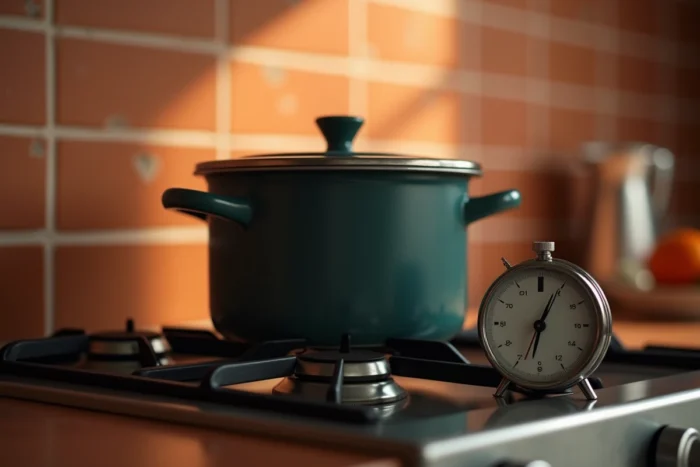
The resting phase after cooking is as crucial as the cooking itself. Letting the rice rest for 10 to 15 minutes off the heat, with the lid closed, allows the grains to finish absorbing the residual steam evenly.
This resting time relaxes the grain structure and makes it fluffier. Lifting the lid midway releases steam and disrupts this process. Patience is essential.
5. Never stir the rice during cooking
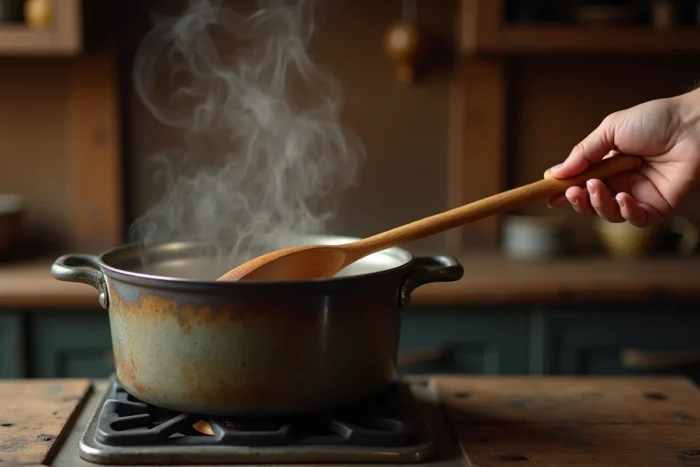
Stirring the rice in the pot releases additional starch and causes a gummy texture. Once the water reaches a boil and the heat is reduced to the minimum, the rice cooks by absorption without intervention.
The only time to touch the rice is after resting, to fluff it with a fork (not a spoon, which crushes the grains). This action separates the grains without breaking them.
6. Adjust cooking time to the variety of rice
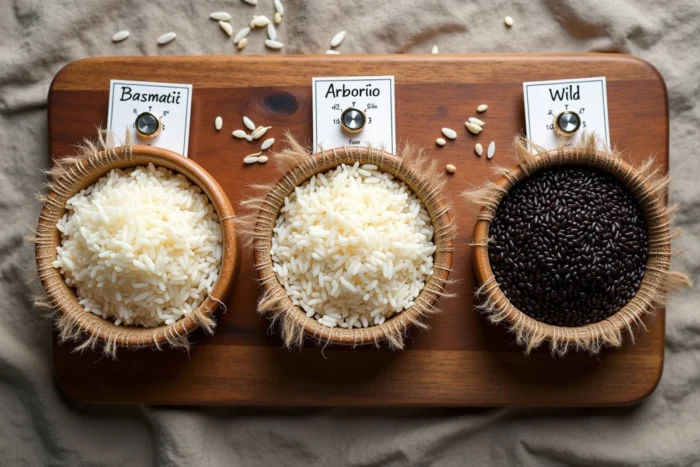
Basmati rice and brown rice are not treated the same way. Basmati absorbs quickly and cooks in about ten minutes on low heat after boiling. Brown rice requires significantly more time and more water because the bran surrounding the grain slows down water penetration.
Each variety has its own ratio and cooking time. Applying a single recipe to all types of rice consistently produces a disappointing result.
7. Use a cloth under the lid to absorb condensation
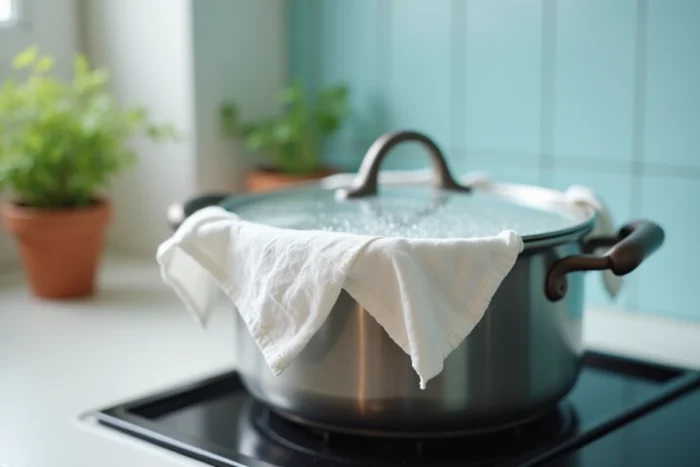
The condensation that forms under the lid drips back onto the rice and makes it soggy on the surface. Placing a clean cotton cloth between the pot and the lid during the resting phase captures this moisture.
This method, common in Persian cuisine (tahdig technique), produces rice with a dry and airy texture on the surface. The cloth should not touch the heat source if it remains on.
8. Sauté the rice in fat before adding water
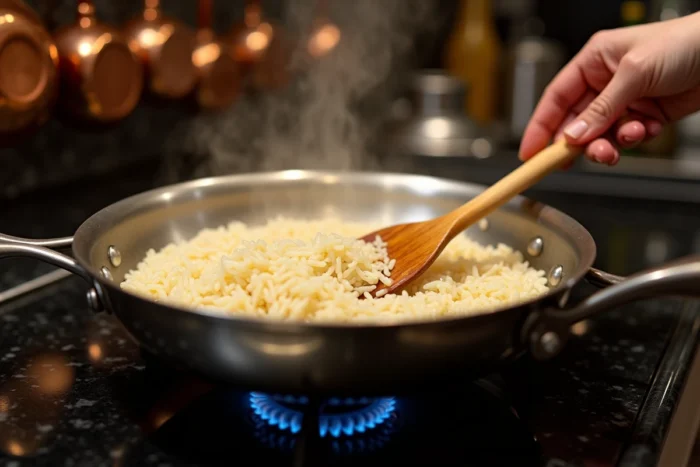
Sautéing the rice in a drizzle of oil or a knob of butter for one to two minutes before adding the water coats each grain with a thin layer of fat. This film prevents the grains from sticking together during cooking.
This is the basis for pilaf rice. The result yields individualized grains with a slight toasted flavor. Use one tablespoon of fat for one volume of rice.
9. Cool cooked rice quickly to avoid Bacillus cereus risk
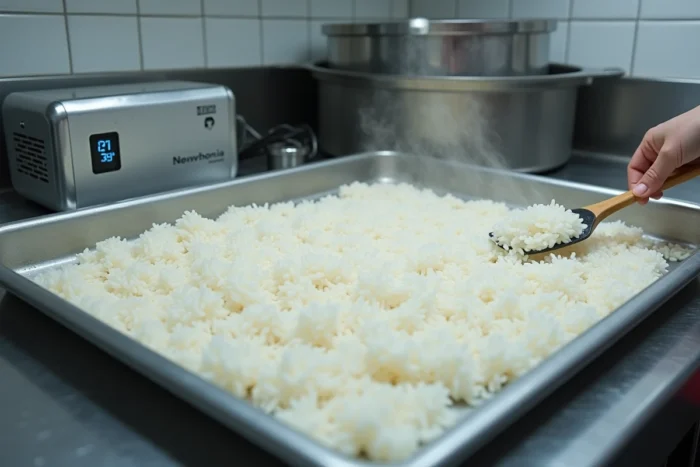
Cooked rice left at room temperature provides a favorable environment for the growth of Bacillus cereus, a bacterium that produces heat-resistant toxins. The rice must be cooled in less than two hours before being placed in the refrigerator.
Once refrigerated, the rice can be stored for up to a few days according to the recommendations of the U.S. Department of Agriculture (FoodKeeper tool). Spreading the rice on a tray speeds up cooling compared to storing it in a block in a deep container.
10. Cook rice with broth instead of water
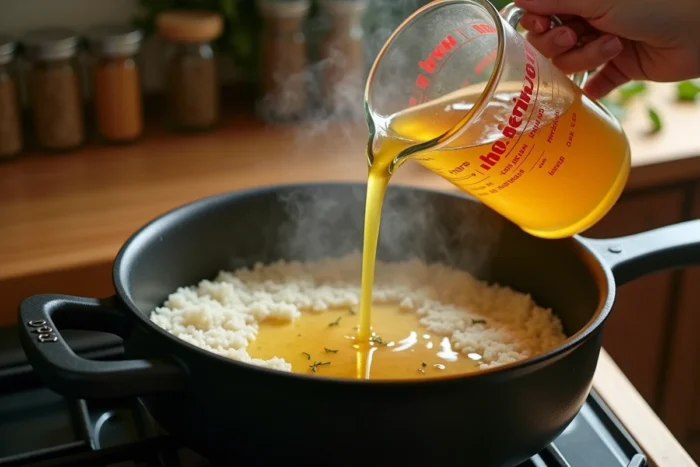
Replacing water with chicken, vegetable, or beef broth adds a layer of flavor that the rice fully absorbs during cooking. The ratio remains the same (1:1.5), only the liquid changes.
To enhance flavor further, add to the pot:
- A crushed garlic clove or a piece of fresh ginger, removed before serving
- A bay leaf or a cinnamon stick for Eastern recipes
- A drizzle of lemon juice at the end of cooking to brighten up a side rice
The perfect rice depends less on the equipment and more on the rigor regarding three parameters: the amount of water, controlling the starch, and the resting time. Mastering these points transforms a mundane preparation into a solid base for any recipe.