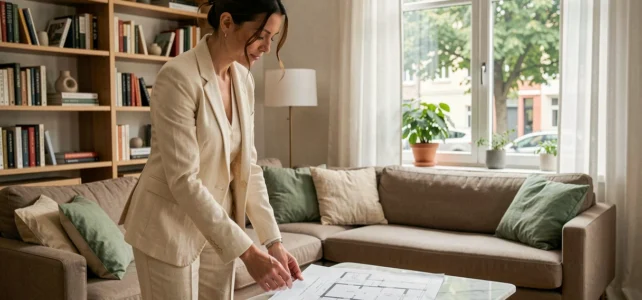
A real estate project is no longer just about choosing a wall color or a sofa. Since the recent regulatory developments regarding energy performance, interior decoration and renovation have become inseparable. Planning your layout without considering the constraints of the DPE risks having to redo everything a few months after purchase.
Energy performance and decoration: two projects to merge from the start
Have you noticed that a property rated F or G on the energy performance diagnosis loses value on the market? The Climate and Resilience Law gradually prohibits the rental of the most energy-consuming housing. Properties rated G can no longer be rented recently, and those rated F will soon follow.
This regulatory framework changes the game for any interior decoration project. Every aesthetic choice must be compatible with energy renovation. For example, installing wooden paneling on a poorly insulated wall is akin to masking a problem that the energy audit will reveal upon resale.
Public aids like MaPrimeRénov’ are now oriented towards extensive renovations, combining several insulation measures to gain at least two DPE classes. This refocusing means that a simple window replacement or the addition of a pellet stove is no longer sufficient to qualify for significant funding. It is better to plan a comprehensive renovation and integrate decoration into this timeline.
For those looking to align real estate purchase and interior layout, it is possible to access the real estate space of Murmures Déco to combine decoration inspirations and market realities.
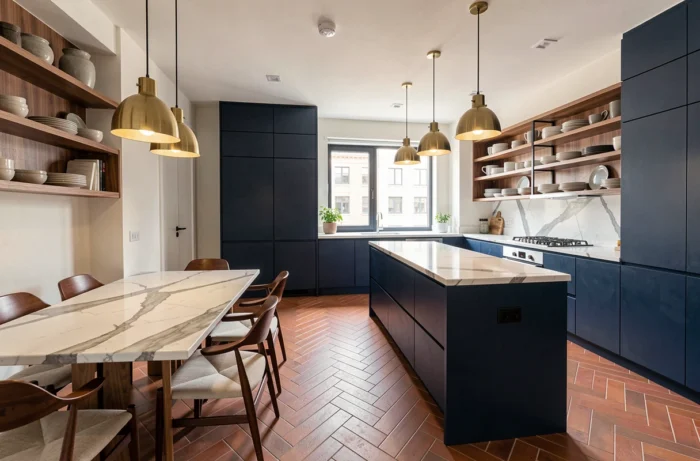
Natural materials in renovation: beyond the trend, a technical choice
Wood, linen, stone, ceramics: these materials are making a strong comeback in interiors. Magazines present them from a style perspective. Their benefits go far beyond that.
Wood as insulation and decorative element
A solid wood floor or oak interior cladding brings a warm atmosphere. It also contributes to the hygrometric regulation of a room. Wood stores and releases ambient humidity, which improves comfort without additional mechanisms.
Be mindful of the source. Certified wood (PEFC, FSC) ensures sustainable forest management. In terms of performance, a well-designed wooden frame wall offers significantly better thermal insulation than a bare concrete block wall.
Ceramics and stone in the bathroom and kitchen
Ceramics resist moisture, are easy to clean, and last for decades. In a bathroom, porcelain stoneware tiles are a better replacement for synthetic coverings that age poorly. Natural stone (travertine, slate) also works well as a kitchen backsplash, provided it is treated against stains.
Prioritizing durable materials reduces the frequency of refresh work, which is important in a medium-term real estate project.
Natural light and layout of living spaces
Light transforms the perception of a space more than any piece of furniture. Before choosing a decor style, ask yourself this question: how does light enter each room?
- In a north-facing living room, light colors on the walls (off-white, beige, pearl gray) amplify the available brightness. A dark wall would absorb the little natural light.
- For an open kitchen to the living room, removing a non-load-bearing wall creates a fluid and better-lit living space. This type of layout appeals to buyers and enhances the property’s value upon resale.
- In a bedroom, a mirror placed opposite the window visually doubles the depth of the room without changing the actual surface.
- Linen curtains filter light without stifling it, unlike opaque curtains that darken the room during the day.
A well-lit space appears larger and more welcoming. This is one of the most effective levers of home staging before a sale.

Color palette and style: how to make sustainable choices
Color trends change every year. Pantone’s Mocha Mousse marked the previous season, while terracotta and ochre tones dominate this year. Should you follow every new palette?
No. An interior built on a neutral base remains elegant for years. Warm tones (beige, sand, greige) on large surfaces (walls, floor, sofa) form a stable foundation. Bright color accents come through accessories: cushions, rugs, lighting, decorative objects. These elements can be easily replaced and at a lower cost when tastes change.
Adapting the style to the real estate project
If you are renovating to live in for a long time, you can afford a graphic wallpaper in the entryway or colorful tiles in the bathroom. These choices assert a personality.
If resale is approaching, neutrality pays off. A potential buyer must be able to envision themselves in the space. The less marked the decoration, the more the property attracts different profiles. White walls, light wood floors, integrated storage: this combination works in almost all cases.
The choice of materials, the management of light, the balance between aesthetics and energy performance: these three axes structure a solid interior decoration project. An interior designed with coherence, from the DPE to the choice of lighting, retains its value much longer than a layout dictated solely by the current trend.