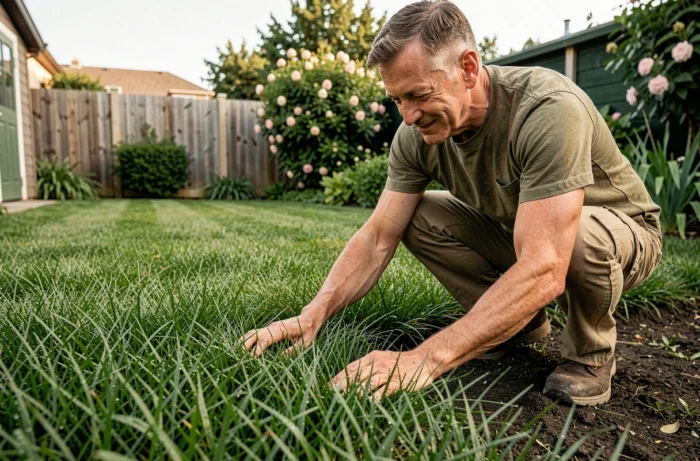
Achieving a lush lawn requires understanding what happens beneath the surface: the type of soil, watering frequency, and mowing schedule all have different impacts on the color and density of the grass. Before applying ready-made solutions, it is useful to measure the gap between common practices and those that yield visible results on an easy-to-maintain lawn.
Lawn watering restrictions: what prefectural decrees actually change
Since 2024, the national drought management framework distinguishes four levels of restriction: vigilance, alert, heightened alert, crisis. At the crisis level, watering of lawns and ornamental gardens is almost completely prohibited.
The prefectural decrees issued between 2024 and 2026 in many departments (Ille-et-Vilaine, Yvelines, Puy-de-Dôme, Toulouse Métropole, Arsac) impose watering bans from 8 AM to 8 PM starting at the alert or heightened alert level. Offenders risk a fine of up to 1,500 euros, increased to 3,000 euros in case of repeat offenses.
| Restriction Level | Lawn watering allowed? | Typical Time Frame |
|---|---|---|
| Vigilance | Yes, with moderation | No time restrictions |
| Alert | Limited | Allowed before 8 AM or after 8 PM |
| Heightened Alert | Very limited | Allowed before 8 AM or after 8 PM |
| Crisis | Prohibited (except for rare exceptions) | No allowed time frame |
The online service VigiEau allows you to check in real-time, based on an address, the local drought level and the authorized uses. For those wishing to discover Clic Garden’s lawn solutions, this regulatory parameter directly influences the choice of varieties and maintenance methods.
Soil and fertilizer: the variables that determine lawn color
A lawn rarely turns yellow solely due to a lack of water. The composition of the soil plays at least as significant a role. Compacted soil prevents roots from going deep, making the lawn dependent on frequent watering and vulnerable at the first heatwave.
Scarification and soil aeration
Scarification removes thatch (layer of moss and debris) that suffocates the roots. Aeration, performed with a hollow-tine aerator, creates micro-channels that allow water and nutrients to penetrate deeper.
These two operations, carried out at least once a year (ideally in spring), improve lawn density more sustainably than simple overseeding.
Fertilizer choice: slow release vs. quick release
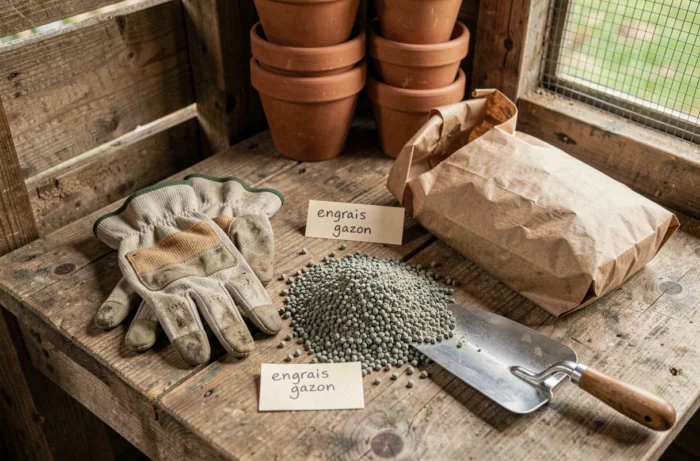
A slow-release fertilizer feeds the lawn over several weeks, avoiding growth spikes followed by sharp declines. In contrast, a quick-release fertilizer provides a spectacular but temporary green boost, pushing the lawn to produce leaves at the expense of roots.
- A balanced NPK fertilizer (nitrogen, phosphorus, potassium) enhances color, disease resistance, and rooting
- Trace elements (iron, magnesium) contribute to dark green color, especially in calcareous soils where iron is less available
- Applying fertilizer on moist soil and never in full heat limits the risk of burning
Mowing height and frequency: the most common mistake
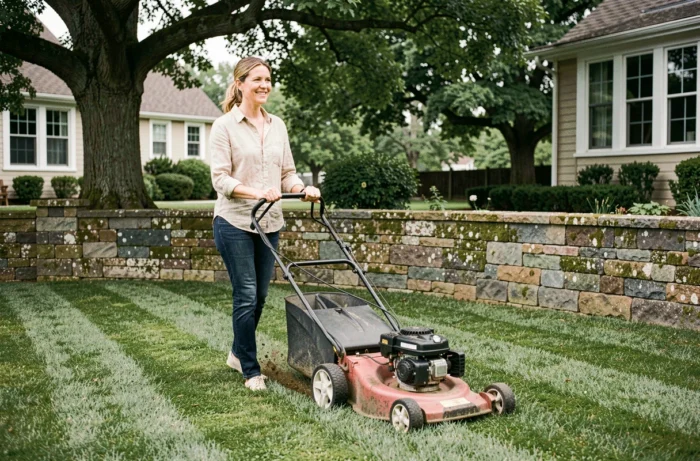
Mowing too short remains the most counterproductive reflex. Never cut more than one-third of the total height of the grass: this often-cited rule is rarely applied. Cutting too low exposes the soil to sunlight, accelerates evaporation, and encourages weed emergence.
During the summer, raising the cutting height allows the lawn to better withstand thermal stress. Longer blades shade the soil and retain moisture longer.
Mulching: recycling mowing waste
Mulching involves leaving finely shredded mowing residues in place. This organic layer decomposes quickly and returns nitrogen to the soil without additional fertilizer. The condition: mow often enough so that the blades remain short and do not form clumps that would suffocate the lawn.
Well-sharpened blades produce a clean cut. Dull blades tear the blades, causing visible yellowing of the tips within a few days.
Effective lawn watering in a water restriction context
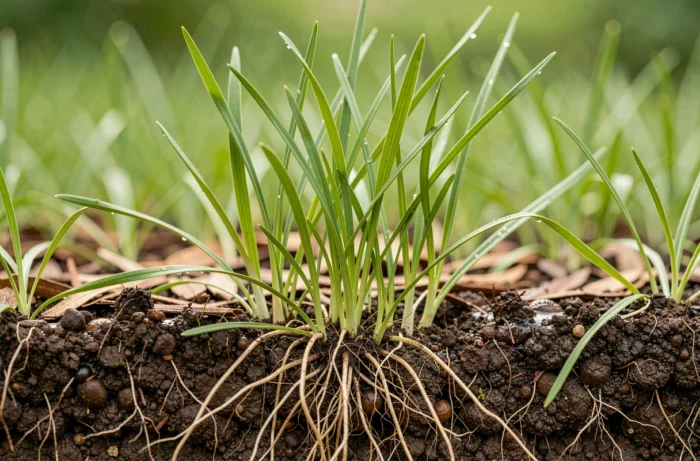
Watering less often but for longer promotes deep rooting. Light daily watering keeps the roots near the surface, where the soil dries out fastest.
- Favor early morning watering (before 8 AM, in accordance with prefectural decrees during alert periods) to limit evaporation
- Aim for sufficient water to moisten the soil several centimeters deep, rather than superficial misting
- Observe the lawn: if the blades do not stand up after passing, it is a sign of real water deficiency, not just temporary stress
Choosing drought-resistant seeds (tall fescue, new generation perennial ryegrass) reduces dependence on watering. A drought-resistant lawn does not eliminate maintenance, but it tolerates dry periods better.
Overseeding and managing unwanted grasses
Thin areas do not always repair themselves. Targeted overseeding, with seeds suited to the soil and exposure, fills in the gaps before unwanted grasses take hold.
Tolerating a few weeds (clover, daisies) is not a sign of neglect. These plants fix nitrogen in the soil and attract pollinators. Chemically weeding the entire surface depletes the soil in the medium term and weakens the lawn against diseases.
Natural products (white vinegar, nettle manure) allow localized control of unwanted plants without affecting soil microbiology. Their effectiveness is slower than that of chemical herbicides, but their impact on the garden ecosystem is significantly lower.
The lush lawn seen on sports fields or in public parks relies on a strict maintenance schedule, not a miracle product. Spring scarification, reasoned fertilization, regular mowing at the right height, and watering adapted to local restrictions: these four actions cover most of the needs of a residential lawn. The rest depends on the soil, local climate, and each person’s tolerance for the few daisies that invite themselves among the blades.