When you open your wardrobe at the beginning of September and hesitate between a light jacket and a sweater, the problem isn’t the lack of pieces, it’s their inadequacy for mid-season. The fashion trends this season specifically address that blurry area between residual warmth and the first coolness. However, you need to know which pieces are truly worth the investment, and which are just visual noise meant to turn over quickly.
Light layering: the true fashion skill of mid-season
Layering is often discussed as an aesthetic concept. In practice, it’s primarily a thermal constraint. In September, mornings at 14 °C and afternoons at 25 °C require you to remove or add a layer without breaking the silhouette.
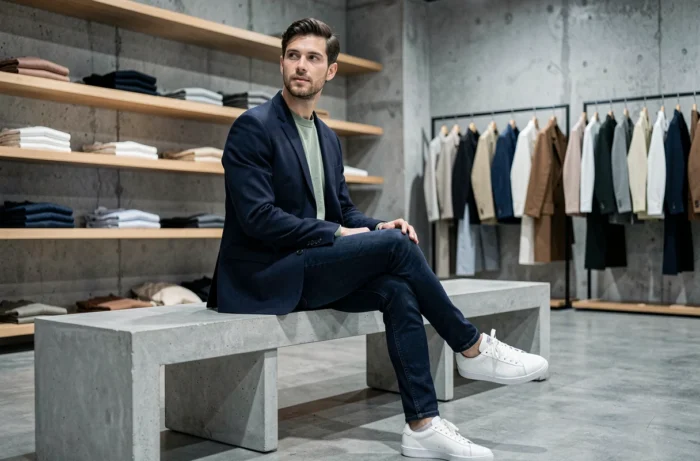
The unlined, soft blazer made from a fluid fabric fulfills this role better than a denim jacket or a shapeless cardigan. It is worn open over a simple t-shirt, and it structures the silhouette without unnecessary bulk. Slightly cropped cuts that stop at the waist work particularly well with high-waisted pants.
The oversized shirt in cotton or blended linen plays a similar role. Worn open over a tank top, it serves as an ultra-light jacket. It’s a piece found in most brands this season, and opinions vary on this point: some versions are too thin to last beyond October, while others are dense enough to endure until the first cold snaps. It’s best to feel the fabric before buying.
You can regularly find analyses of these transitional pieces on fashion-blog.fr that help sort through the plethora of offerings this fall.
Straight jeans and fluid trousers: two cuts to decide based on usage
Jeans remain the pivot of the autumn wardrobe. This season, the straight cut dominates, but not just any straight cut. We’re looking for a leg that falls without clinging, with a mid-rise waist. Raw or slightly faded denim transitions effortlessly from the office to the weekend.
The barrel jeans, wider at the knee and tapered at the ankle, continue their rise. Their rounded silhouette changes the proportions of the look and requires a fitted top to avoid a pajama effect. This is a piece to try on in-store: the cut varies significantly from one brand to another.
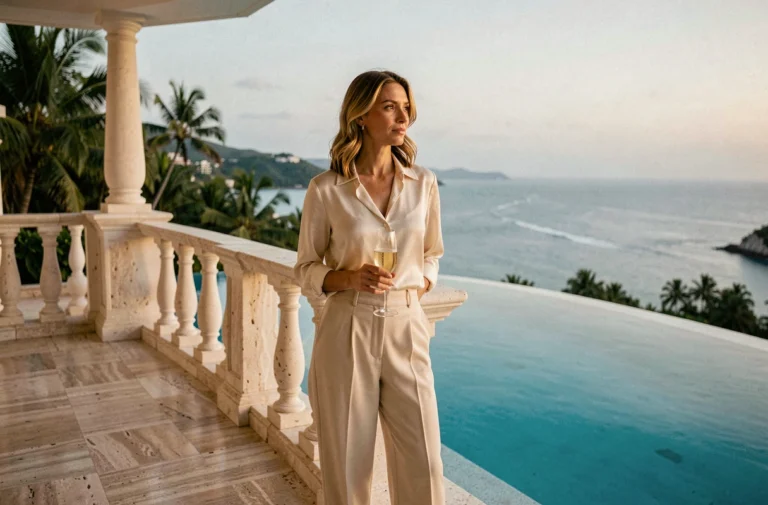
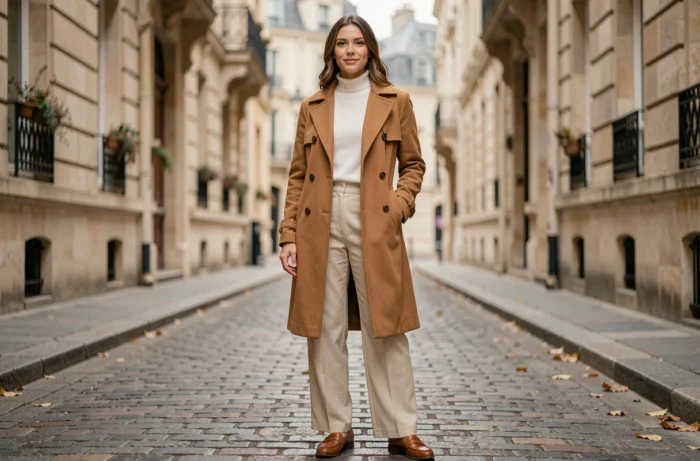
The fluid trousers made from lightweight fabric (viscose, crepe) offer an alternative for days when denim feels too rigid. In neutral colors (ecru, khaki, chocolate), they pair well with just about anything. Their practical advantage: they dry quickly, wrinkle little, and can be machine washed without drama.
Choosing between the two based on context
- The straight jeans work better with boots or high-top sneakers, in a casual or casual chic style.
- The fluid trousers naturally pair with loafers, ballet flats, or low-heeled sandals for a more dressed-up look.
- For the office, dark-hued fluid trousers (burgundy, navy) replace tailored pants without the stiffness.
Autumn palette: burgundy, chocolate, and colors that hold up
This season’s color trends move away from summer pastels to return to warm, deep tones. Burgundy emerges as the dominant color of autumn, applicable to nearly all types of pieces: knitwear, leather, cotton.
Chocolate and ecru form a duo of neutrals that replaces classic beige. These shades work as base colors: you build on them with a colorful accessory or a patterned piece.
Khaki is also making a comeback, but in more muted versions than in previous years, almost olive-toned. It can be worn as a jacket or cargo pants, but never as a total look lest you resemble a uniform.
Prints: what works concretely
Checks remain a safe bet for shirts and scarves. Floral patterns, on the other hand, are shifting towards larger scales and darker backgrounds, making them wearable beyond spring. A floral print on a black or navy background transitions from day to evening without a change in style.
Autumn fashion accessories: invest little, change a lot
Accessories are the most cost-effective lever for updating a look without having to buy a whole new wardrobe. This season, three categories stand out.
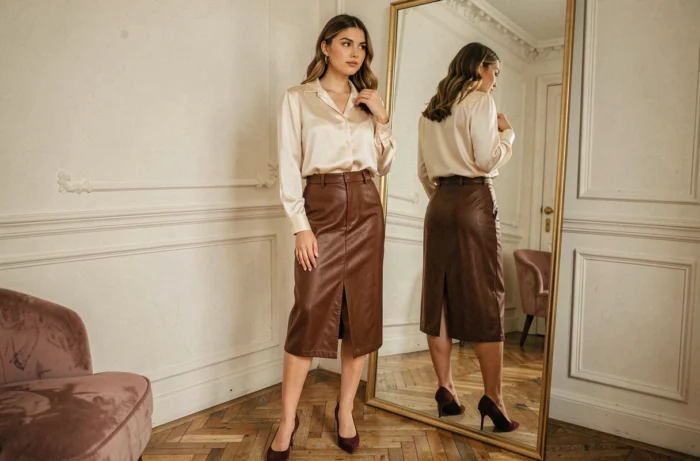
The wide belt, worn over a blazer or a straight dress, redefines the waist and gives structure to loose pieces. In smooth or braided leather, it transforms a basic look into a constructed outfit.
Medium-sized structured bags replace the XXL models from previous seasons. More compact, they force you to carry less and lighten the silhouette. Geometric shapes (rectangular, trapezoidal) dominate.
On the footwear side, the square-toed or slightly pointed boot remains a classic for the season. We prefer it ankle-high, with a block heel of a few centimeters, suitable for both walking and the office.
Fashion trends and sustainability: what changes concretely in 2026
Since July 2026, large companies in the EU are no longer allowed to destroy unsold clothing, accessories, and shoes. They must publish the volumes involved and the disposal methods used each year. This ban pushes brands to design more timeless pieces that can be resold rather than ending up destroyed.
The European regulation ESPR (Ecodesign for Sustainable Products Regulation) goes further by gradually imposing criteria for sustainability, reparability, and recyclability for textile products. A “seasonal essential” will soon be defined by its ability to last beyond a single season.
In France, fashion accounts for about 40% of the second-hand market, a segment that is growing several times faster than new. Buying a blazer or jeans second-hand is no longer a militant act; it’s an economic reflex shared by a massive portion of buyers.
Building a stylish look this season is primarily about choosing pieces that will last through October, November, and beyond. Trends may come and go, but a good blazer and well-cut jeans remain.