Equipping a child on a daily basis is no longer just about filling a toy chest. The French market for games and toys has shown notable growth since 2024-2025, even as the number of children under 12 is declining. This paradox compels a closer look at what families are buying, why they are spending more, and what types of equipment truly make a difference in children’s daily lives.
Sensory toys and DIY kits: what recent trends reveal
Lists of craft activities are circulating everywhere. What they often overlook is the connection between these activities and an underlying trend in the toy market. Since 2024-2025, soft sensory toys (squishies, ultra-soft plush toys, stress-relief objects) and creative sensory DIY kits have been gaining significant traction in France.
This rise is not insignificant. It reflects a parental demand for items that combine tactile manipulation, concentration, and child autonomy. Squishies, for example, have been the subject of safety alerts reported by 60 Millions de consommateurs following an incident involving an 8-year-old child. Checking for CE compliance and the absence of toxic substances remains a reflex to adopt before purchasing any sensory toy.
To explore a wide catalog of age-appropriate products, from childcare to creative play, you can discover the Kidits website, which lists several specialized brands.
| Type of equipment | Indicative age range | Main benefit | Point of caution |
|---|---|---|---|
| Soft sensory toy (squishy, stress-relief plush) | 3-10 years | Emotion management, concentration | CE compliance, absence of harmful substances |
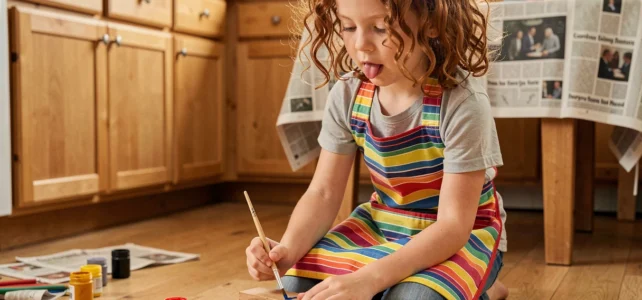
| Creative DIY kit (painting, modeling clay, assembly) | 4-12 years | Fine motor skills, creative autonomy | Small parts for under 3 years |
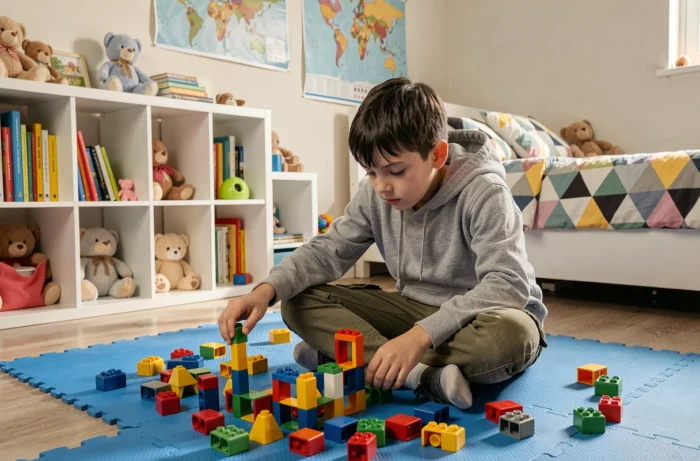
| Modular construction game | 3-12 years | Spatial reasoning, patience | Compatibility between brand systems |
| Ergonomic children’s furniture (desk, chair) | 3-10 years | Posture, dedicated activity space | Height adjustability to accommodate growth |
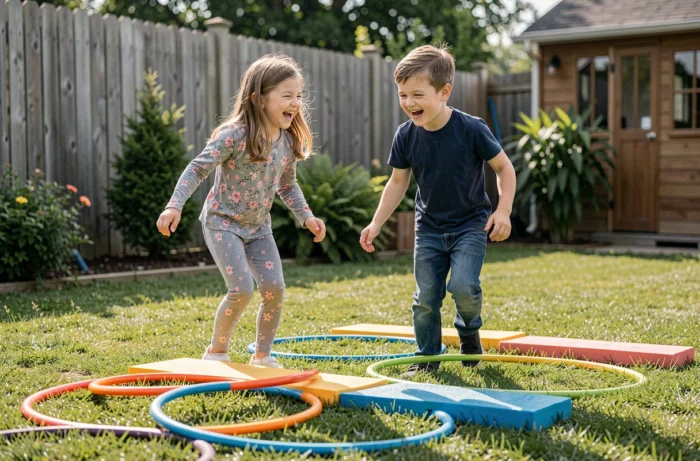
| Outdoor equipment (bicycle, balance bike) | 2-8 years | Gross motor skills, physical activity | Helmet and protective gear suitable for size |
Screens and young children: French regulations change the game
The law of February 19, 2025, prohibits exposing children under 3 years old to screens in collective childcare settings in France. This regulatory evolution has a direct impact on daily equipment choices: early childhood structures must offer physical and sensory alternatives.
For families, the message is clear. Replacing a screen with a manipulable object is not an aesthetic choice; it is a legal framework. Motor skills kits, stacking games, or tactile books are becoming essential equipment for 0-3 year-olds, where a tablet sometimes fulfilled this role.
Beyond 3 years, the question arises differently. The screen is no longer prohibited, but health recommendations suggest limited use. Parents looking to engage their children without resorting to digital means are turning to activities with a strong sensory or physical component.
Concrete criteria for choosing durable equipment
Buying a toy or children’s furniture without a framework often leads to accumulating little-used items. Three criteria can effectively filter choices.
- Adaptability to the child’s actual age: a game that is too simple becomes boring in a few days, while a game that is too complex ends up in a closet. Manufacturers indicate an age range, but observing the child’s interests is more reliable than a mention on the packaging.
- Versatility of use: a modeling clay kit can be used dozens of times, while a gadget with a single function quickly loses its appeal. Items that allow for multiple play scenarios (construction, imitation, free creation) offer a better cost/duration of use ratio.
- Physical robustness and ease of cleaning: soft sensory toys, for example, accumulate dust and bacteria. Favoring machine-washable or easy-to-clean materials simplifies maintenance and extends the product’s lifespan.
Children’s furniture: a often underestimated category
A desk and chair suited to the child’s size are not a luxury. A dedicated space for craft activities increases independent playtime. Height-adjustable models accommodate growth and prevent the need to buy new furniture every two years.
The current trend among specialized manufacturers is towards multifunctional furniture: tiltable surface for drawing, integrated storage for creative materials, erasable surface. These details, often missing from adult furniture repurposed for children, make a daily difference.
Second-hand and refurbished supplies: an option that is becoming structured
The second-hand market for children’s equipment is becoming more professional. Parents are increasingly buying used school supplies and games, motivated by both price and environmental considerations. This practice also extends to clothing, furniture, and outdoor recreational equipment.
A well-checked second-hand construction game works just as well as a new one. The main precaution concerns missing pieces and the condition of safety elements (closures, corners, fasteners). For soft sensory toys, however, opting for second-hand is more delicate: wear affects tactile properties, and health compliance is difficult to verify after use.
The choice between new and second-hand therefore depends on the type of product. Construction games, books, and furniture withstand a second life well. Toys with prolonged contact with skin or mouth deserve a new purchase with compliance guarantees.
Equipping a child on a daily basis relies less on the quantity of items than on their relevance to their age, interests, and available space. Recent regulations on screens for toddlers accelerate an already ongoing movement: families are investing more in durable and versatile physical objects, even if it means spending more per item purchased.