
Cardiac amyloidosis remains underdiagnosed, even though its manifestations often precede serious cardiac events by several years. Among these events, cardiac syncope holds a particular place: brief and sometimes isolated, it can be the only warning sign before a heart stop. Understanding the link between these two clinical realities requires looking upstream of the classic cardiac symptoms, where clues still go unnoticed.
Bilateral carpal tunnel syndrome and neuropathy: red flags well before the heart
Public medical content describes cardiac amyloidosis by its consequences on the heart muscle: thickening of the walls, heart failure, arrhythmias. This organ-by-organ breakdown masks a fact documented by recent studies: warning signals often appear outside the cardiovascular system, sometimes years before any syncope.
A machine learning study involving 452 genetically tested patients between 2019 and 2024 identifies bilateral carpal tunnel syndrome and peripheral sensory neuropathy as the red flags most strongly associated with a positive genetic test for a hereditary form of transthyretin amyloidosis. Balance disorders are also among the significant markers.
In other words, a patient who has undergone surgery on both wrists for carpal tunnel syndrome, who then develops tingling in the feet followed by progressive shortness of breath, presents a picture that should trigger cardiac investigation. In practice, these symptoms are treated separately by different specialists, and the link between fatal cardiac syncope and cardiac amyloidosis is only established at an advanced stage of the disease.
Transthyretin cardiac amyloidosis: accumulation of red flags before diagnosis
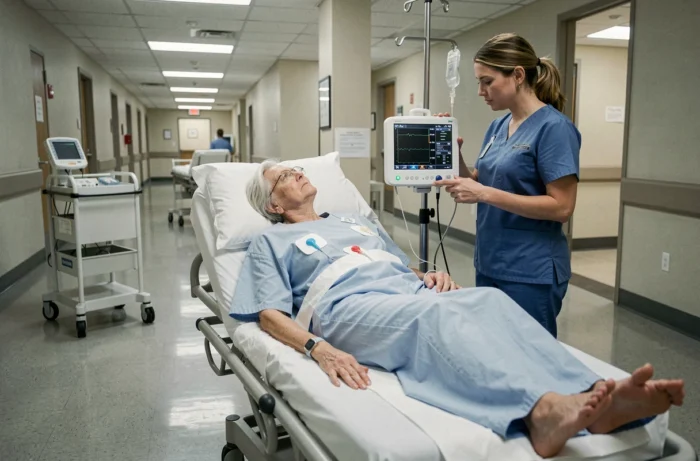
A national Japanese cohort of patients with transthyretin cardiac amyloidosis (ATTR-CM), followed between 2020 and 2024, provides concrete insight into the timeline of symptoms. More than half of the patients had at least five red flags among seven before the diagnosis was made.
These red flags include dyspnea, lower limb edema, cardiac rhythm disturbances, and neuropathy. The fact that they coexist in the same patient over an extended period without triggering targeted investigation illustrates a structural problem in the diagnostic pathway.
Scintigraphy and biomarkers: available tools but underused
Data from this cohort show that non-invasive examinations now allow for diagnosis without biopsy in many cases. Scintigraphy with technetium derivatives, combined with cardiac biomarkers (troponin, NT-proBNP), offers a reliable detection pathway for ATTR-CM.
The gap between the availability of these tools and their actual use in primary care remains a point of friction. A general practitioner faced with an elderly patient presenting with heart failure with preserved ejection fraction does not systematically think of amyloidosis as a possible etiology. The average diagnostic delay remains significant, although recent data suggest a gradual improvement.
Cardiac syncope: when loss of consciousness signals a vital risk
Cardiovascular syncope is defined as a brief, sudden loss of consciousness with spontaneous recovery, caused by a decrease in blood flow to the brain. The most common form, vasovagal syncope, is benign and affects more than one in five adults during their lifetime.
The clinical problem lies in distinguishing this benign form from cardiac-origin syncopes, which signal a risk of cardiac arrest. Cardiac causes include ventricular arrhythmias, cardiomyopathies, severe bradycardia, and valvular diseases. In the context of cardiac amyloidosis, amyloid deposits disrupt the heart’s electrical circuit, causing a rhythm that is too slow or too fast, potentially leading to cardiac arrest.
Three symptoms not to ignore before cardiac arrest
According to a study reported by Inserm, half of the patients who suffered a cardiac arrest had experienced warning signs in the days or weeks prior:
- Intermittent chest pain, especially if it is intense and felt like a vice, is the most frequent signal in men
- Unusual exertional dyspnea, disproportionate to the physical activity performed, should raise concern even in the absence of pain
- Brief loss of consciousness, even with complete recovery, warrants an urgent cardiology consultation
Individuals who contacted emergency services as soon as these symptoms appeared had six times higher chances of surviving the cardiac event. This figure underscores the importance of a rapid response, well before the heart stops itself.
Heart failure and amyloidosis: a differential diagnosis still overlooked
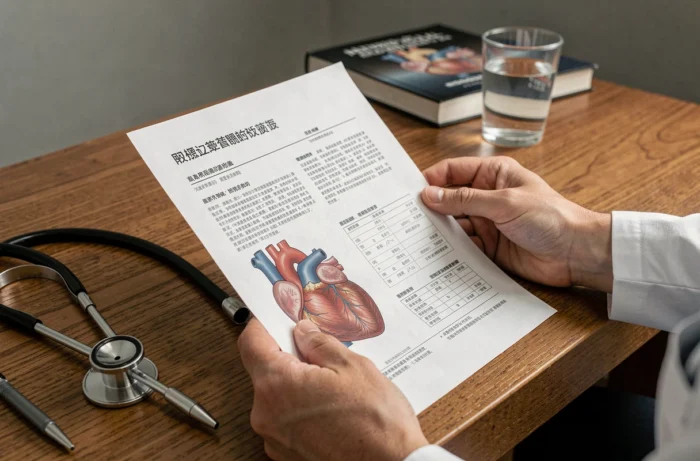
Cardiac amyloidosis causes progressive stiffening of the myocardium. The heart, thickened by amyloid protein deposits, loses its ability to fill properly. This mechanism leads to heart failure known as preserved ejection fraction, a clinical picture shared with other pathologies (long-standing hypertension, hypertrophic cardiomyopathy).
It is precisely this overlap that delays diagnosis. A patient presenting with exertional dyspnea, edema, and ventricular hypertrophy on echocardiography will often be treated for classic heart failure. Amyloidosis is only considered when standard treatment fails or when extra-cardiac signs attract attention.
The available data do not yet allow for conclusions about the exact impact of the new European guidelines for managing heart failure on the detection rate of amyloidosis in routine practice. Field feedback varies on this point according to centers and countries.
Cardiac arrest is responsible for 50,000 deaths per year in France. Some of these deaths occur in patients whose cardiac amyloidosis had never been identified. Recognizing that bilateral carpal tunnel syndrome, foot neuropathy, and increasing shortness of breath form a coherent bundle, rather than three distinct problems, represents the first lever to reduce this diagnostic delay.