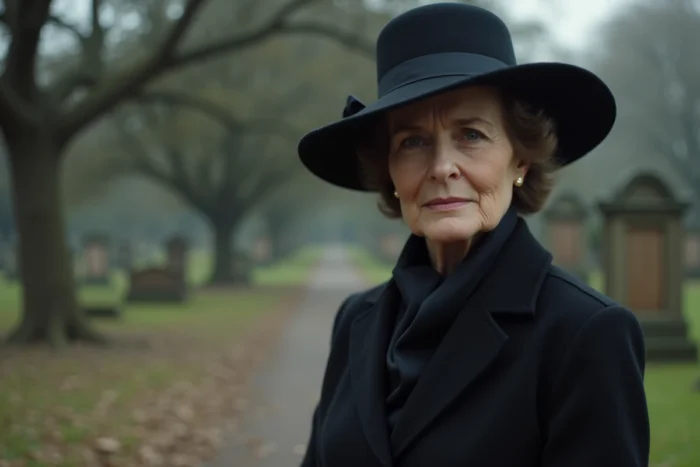
During funerals, every detail of attire conveys an intention. The hat, an accessory once ubiquitous in funeral processions, now raises a simple question: should one still wear one, and if so, how to avoid a faux pas? The answer lies less in a universal rule than in a set of codes related to the location, the faith, and the wishes of the deceased’s family.
When to remove your hat during funerals: the gesture that truly matters
You may have noticed that the moment one removes their hat attracts more attention than the hat itself? This is where true funeral etiquette is played out.
In a Catholic church, men remove their headwear as soon as they enter the building. This gesture signifies respect for the sacred space. Women, on the other hand, may keep their hats on throughout the religious ceremony. This distinction dates back to ancient conventions, still widely observed in French parishes.
In a mosque, both men and women cover their heads. In a synagogue, a kippah is required for men, and a head covering is expected for women. For a civil ceremony indoors or outdoors, knowing the hat rules for funerals helps tailor your gesture to the specific context.
The reflex to remember: observe what the deceased’s relatives and officiants do. If no one is wearing headwear, keeping yours on may set you apart. If the family has expressed clothing preferences, they take precedence over any general convention.
Mourning hat for women: shape and color suitable for funerals
The choice of a women’s hat for a funeral is based on two criteria: the sobriety of the shape and the discretion of the color. Everything else is secondary.
Shapes that respect solemnity
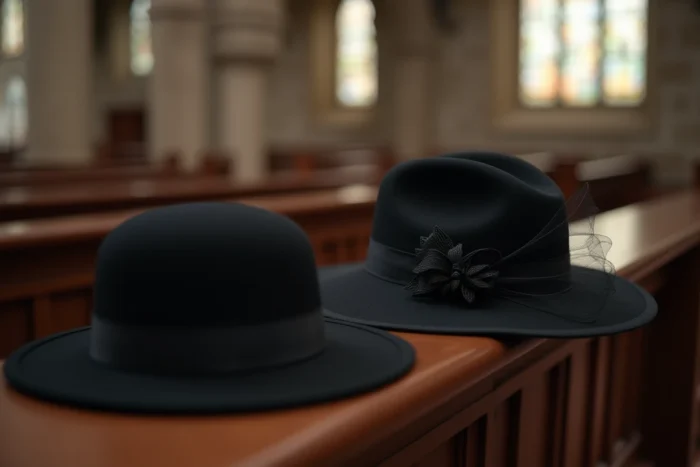
A medium-brimmed hat (neither a beach hat nor a cocktail fascinator) is suitable for most ceremonies. Bell-shaped models, short-brimmed felt hats, or toques remain safe bets. Avoid overly spectacular shapes or flashy ornaments: colorful feathers, large flowers, and long veils belong more to costume than to solemnity.
The short veil, however, remains associated with mourning in French tradition. It is mainly worn by the deceased’s close relatives.
Colors to favor for a funeral hat
- Black remains the reference color for a mourning hat in France, in line with the dark attire expected at funerals.
- Dark navy blue, anthracite gray, and dark purple are accepted. These shades blend seamlessly into the atmosphere of the ceremony.
- White is reserved for traditions that associate it with mourning (some Asian or African cultures). In a classic Western context, it may be surprising.
Material also matters. A matte felt or a sober fabric is preferable to a shiny straw or satin hat, which draws attention instead of blending into the assembly.
Hat for men at funerals: common mistakes and current practices
Among men, wearing a hat during a funeral has become rare. When worn, it is often a dark felt or bowler hat, an accessory that harks back to a time when men’s suits always included headwear.
The most common mistake is keeping the hat on throughout the ceremony. In a Christian context, a man wearing a hat inside the church sends a signal of disrespect, even if unintentional. The hat is removed upon entry and replaced upon exit.
Another pitfall: the cap. Even if sober and black, it is still perceived as casual wear. If you do not have a classic hat, it is better to go without headwear than to improvise with a sporty accessory.
Heatwave and funerals: adapting the hat to climatic conditions
In recent years, episodes of extreme heat have significantly altered practices during funerals. Several funeral homes now communicate about the lighter attire of their teams during heatwaves.
A report from Résonance Funéraire emphasizes that the appearance of funeral staff must adapt to climatic circumstances, including lightening or removing certain traditional elements of ceremonial attire. This ethical movement refocuses expectations on solemnity rather than rigid codes.
For participants, this evolution has a concrete effect. When professionals themselves remove their jackets, no one will fault you for wearing a wide-brimmed hat to protect against the sun, provided it remains sober. A black panama or a dark cotton hat then becomes a choice that is both respectful and pragmatic.
Civil or religious ceremony: the type of funeral changes the hat codes
Not all funeral ceremonies operate the same way. The location and format alter what is expected.
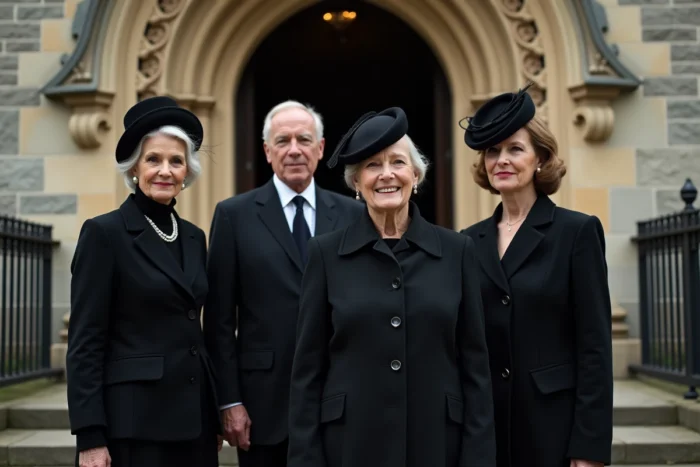
- During a religious ceremony in a church, the conventions are stricter. Women’s hats are tolerated, while men’s hats must be removed indoors.
- During a civil ceremony in a funeral home or outdoors, the codes relax. The hat becomes a personal choice, accepted as long as it remains discreet.
- During so-called affinity ceremonies (personalized tributes, thematic secular ceremonies), the family’s wishes take precedence over any dress convention. Some families explicitly request bright colors or unconventional attire.
The rise of personalized funerals prompts a different approach to the question. Rather than seeking an absolute rule, inquire with the organizer or close relatives. A two-minute call can prevent a two-hour discomfort.
The mourning hat has not disappeared from funerals in France. Its status has changed: from a social obligation, it has become a personal choice framed by respect for the location, the faith, and the family. Wearing a sober hat to a funeral remains entirely acceptable. Keeping it on at the wrong moment, much less so.